SEPTIC TANK & DRAIN LINE INSTALLATION
What Every Western NC Homeowner Should Know Before Installing a Septic Tank and Drain Lines
If you're building a home in Henderson County, the mountains around Brevard, or anywhere else in Western North Carolina, there's one thing that has to happen before you can move in: the septic system has to go in first. And in WNC's mountain terrain, septic tank and drain line installation isn't as simple as it is on flat, forgiving soil. The slopes, rocky ground, and clay-heavy soils of this region require experience — and the right excavating equipment — to get it done right.
At Gravely Hydroseeding & Excavating, we've been installing septic systems throughout Henderson County and Western North Carolina for over 15 years. Here's what we want every property owner to understand before breaking ground.
What Is a Septic Tank and Drain Line System?
A conventional septic system has two main parts: the septic tank and the drain field (also called the leach field or drain lines).
The septic tank is a buried, watertight container — usually made of concrete or polyethylene — that receives all the wastewater from your home. Inside the tank, solids settle to the bottom and form sludge, while lighter materials like grease float to the top as scum. The liquid in the middle — called effluent — flows out of the tank and into the drain field.
The drain lines (leach lines) are a network of perforated pipes buried in gravel-filled trenches. Effluent slowly seeps out through the perforations and filters down through the soil, where it's naturally treated by soil bacteria before it reaches groundwater. The size and layout of the drain field is determined by how much wastewater your household produces and how well your soil absorbs water.
Why WNC Mountain Terrain Makes Septic Installation Different
Western North Carolina isn't flat farm country — and that changes everything about how a septic system is sited and installed.
Steep slopes: On a hillside lot, gravity can work for you — or against you. Proper site evaluation determines whether your terrain supports a conventional gravity system or requires a pump system to move effluent uphill to the drain field.
Rocky soil and shallow depth to bedrock: Many WNC mountain lots have thin soil over granite or gneiss bedrock. If the soil isn't deep enough or doesn't perc adequately, a mound system may be required — where the drain field is built up above grade rather than dug in below it.
Clay soils and drainage issues: Clay-heavy soils absorb water slowly. A perc test will determine whether your soil can handle a standard drain field or whether an alternative system design is needed.
High rainfall: Western NC receives 50–70 inches of rainfall per year in many areas. A properly sited and installed drain field accounts for seasonal saturation — a poorly placed one can fail within a few years.
The Septic Installation Process: Step by Step
Step 1 — Perc Test & Site Evaluation: Before any permit is issued, a licensed soil scientist visits your property to evaluate the soil and perform a percolation (perc) test. This test measures how quickly water drains through the soil and determines what type of system your lot can support. We prepare and grade the test site so the evaluation goes smoothly.
Step 2 — Permit Application: In Henderson County, the Environmental Health Division of the Health Department issues the septic permit based on the soil scientist's report. No installation can legally begin until the permit is in hand. We're familiar with Henderson County's permitting process and can help you navigate it.
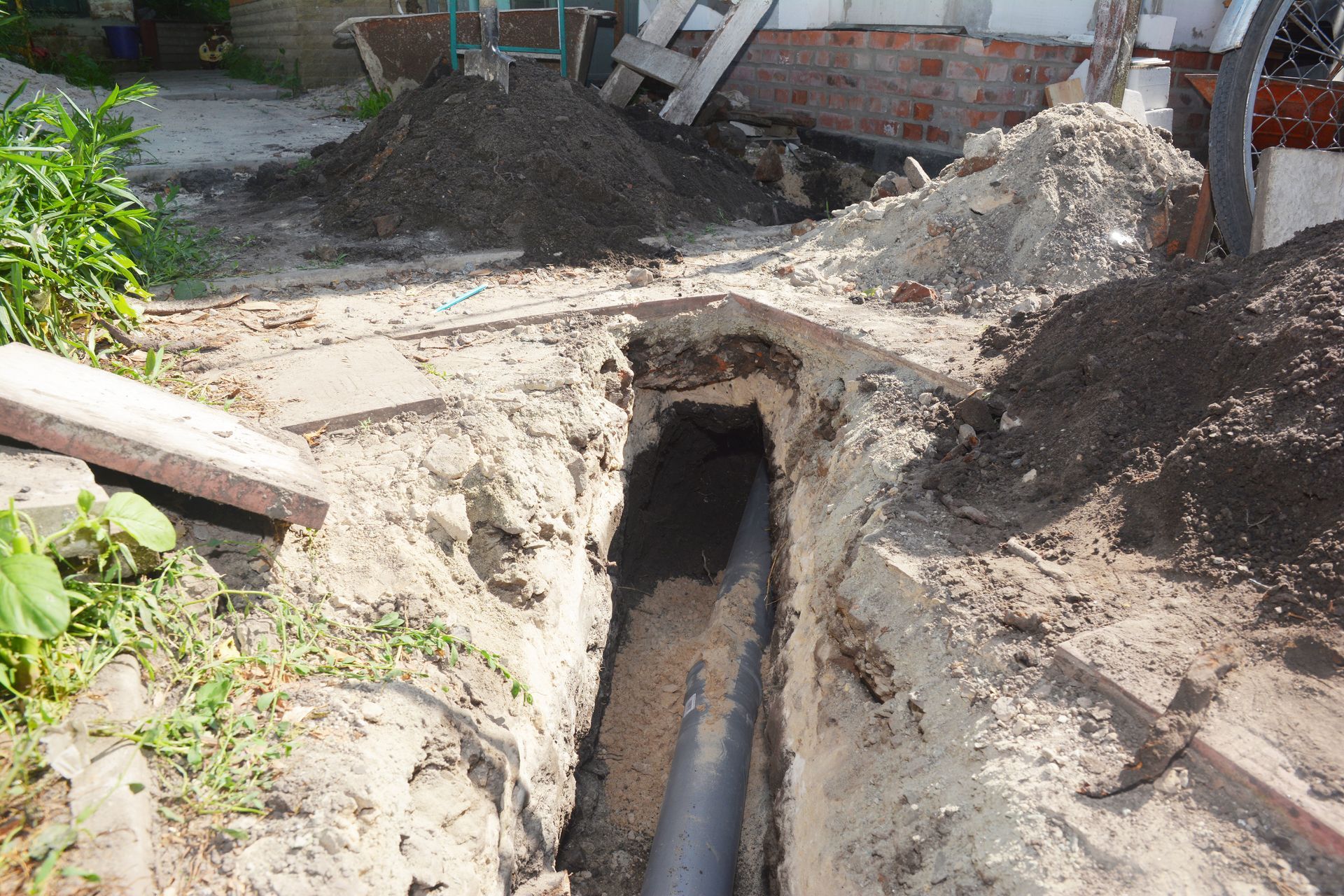
Step 3 — Excavation: Once permitted, we excavate the tank location and drain field trenches to the dimensions specified on the permit. Our equipment is built for WNC's steep, rocky terrain — we can access sites that smaller operators can't.
Step 4 — Tank & Drain Line Installation: We set the septic tank, install the inlet and outlet baffles, run the distribution lines, and construct the drain field with proper gravel bedding to NC code.
Step 5 — Inspection: Henderson County Environmental Health inspects the system before we backfill. This protects you — it confirms the installation meets code before it's buried.
Step 6 — Backfill & Restoration: We backfill, compact, and grade the disturbed area. If you want the yard restored quickly, we can hydroseed the area immediately — our hydroseeding service establishes grass fast and prevents erosion while the new ground settles.
How Big Should a Septic System Be?
In North Carolina, septic system size is determined primarily by the number of bedrooms in the home — not the number of bathrooms or residents. A typical 3-bedroom home requires a minimum 900-gallon tank in NC, though larger tanks are often recommended. The drain field size depends on the perc test results and the daily wastewater flow estimate.
One thing we always tell clients: if you're planning to add bedrooms down the road, size the system for the finished home now. Expanding a septic system after the fact is significantly more expensive than sizing it correctly from the start.
What Does Septic Installation Cost in Western NC?
Septic installation costs vary considerably based on system type, site conditions, soil, and access. A straightforward conventional gravity system on an accessible, suitable lot will cost less than a mound system on a steep lot with marginal soil. The best way to get an accurate number is a site visit and free estimate — which is exactly what we offer.
What we can tell you is that cutting corners on septic installation is one of the most expensive mistakes a property owner can make. A system that fails in five years because it was undersized or improperly installed will cost far more to repair or replace than it would have to install correctly the first time.
Serving Henderson County and All of Western NC
Gravely Hydroseeding & Excavating installs septic tank and drain line systems throughout Henderson County and the surrounding Western North Carolina region — including Hendersonville, Flat Rock, Mills River, Fletcher, Brevard, Saluda, Tryon, Columbus, and surrounding communities in Buncombe, Polk, and Transylvania Counties.
Ready to get your septic system installed right the first time? Call Gravely Hydroseeding & Excavating at 828-388-1601 for a free estimate. Licensed, bonded, and insured — serving Western NC for 15+ years.